[New post] What Is The Streaming Future For The Stuff We Want To Watch Live?
Jeremy Evans posted: " While entertainment content streaming has grown exponentially in the past five years, media (e.g., news) and sports content has taken a slower approach. Part of the reason for slower growth in media and sports is that the two are best consumed live, vers"
While entertainment content streaming has grown exponentially in the past five years, media (e.g., news) and sports content has taken a slower approach. Part of the reason for slower growth in media and sports is that the two are best consumed live, versus on-demand. News and sports coverage are rarely re-watched.
Nonetheless, linear television and streamed content are not mutually exclusive. Meaning, there is content in entertainment, media, or sports that could be consumed live or not. However, the nature of games is that once the score and highlights of top plays are seen, there is little need to go back-in-time to review unless for professional reasons. News works in a similar fashion. The aforementioned is especially true in the digital and social media age where information is immediate nearly everywhere there is an internet or mobile phone connection. News and sports information travel too fast to be watched delayed.
Courtesy: Axia Public Relations
A movie can be spoiled by knowing the ending, but there is still the underlying entertainment value. Better stated, a consumer is more likely to re-watch a film or television series than a news broadcast or sports match. It is more likely that a news broadcast or sports highlights will be watched to see a recap, but a majority of consumers will view it live.
It is also true that news and sports do not need to appear on linear television to be successful, but where advertising is concerned consumers are accustomed to watching news and sports with commercials on linear platforms. Whereas entertainment is increasingly commercial-free or with an option to pay more to avoid commercials. The Super Bowl is literally, at least in part, viewed to see the commercials. News and sports are not re-watched so there is less value over time for things in the past. However, entertainment content is often re-watched and therefore there is some additional value down the road for viewership and keep subscribers watching and paying the fee.
Entertainment also has the derivatives aspect of using an older piece of content to renew (e.g., sequels, prequels, film to television, and vice-versa). News and sports cannot be recycled on the same level as entertainment. History does repeat itself, but the powers that be have not been able to monetize it yet.
Bally's, the sports gaming and casino group, did purchase naming rights to multiple regional sports networks (RSNs) to add to its portfolio and brand, but until recently RSNs had been limited to linear television through cable packages. Bally's is now looking at pursuing a streaming-forward model that will be more direct, interactive, and hopefully easier to reach people for consumption purposes. The next important play in the streaming space will be the traditional networks that own both news and sports properties.
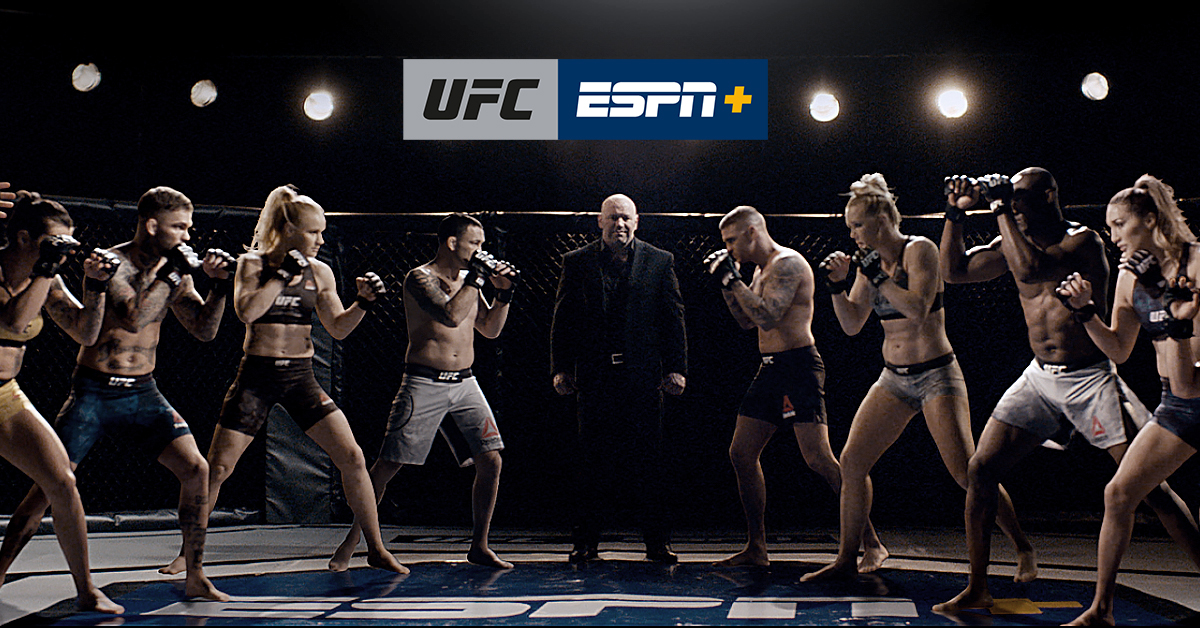
To date, there has been a hybrid approach of offering the traditional linear news and sports, with some options for streaming. Consider Peacock/NBC, ViacomCBS/Paramount+, ABC/Disney/Hulu, and Fox Nation. Then there are the standalone options like Amazon and some additional options like DAZN. With the Toronto Blue Jays looking to sell a stake in the franchise, it would be ideal to sell a stake in a streamer with it. Furthermore, with Endeavor growing the UFC side, which does not fall under the Writers Guild of America (WGA) entertainment production restrictions, the growth for streaming is in non-team sports as well.
Courtesy: ESPN
Back to the question: will news/media and sports catch up to entertainment in streaming? It really depends on how innovative networks want to get in their news and streaming content. It is also dependent on how non-networks like Amazon continue to buy up sports rights where the only platform is a streamer. Where networks control a majority of the live sports rights licenses and news media stations, outsiders like Amazon, Apple, and Netflix could be very serious players in the space.
Major League Baseball has made a recent push into streaming, but until some of the longer-term deals expire across professional and collegiate sports, there will be delays in live sports embracing streamingexclusively. Ideally, consumers will have multiple options and price points depending on the services wanted. Time will tell.







No comments:
Post a Comment