[New post] What If Baseball Had A Scandal And America Didn’t Care?
Jay Mariotti posted: " What's sad is, no one cares anymore. The nation's baseball aficionados, assuming any are left, are so numb to the death march of scandals in their sport — electronic sign-stealing, steroids, tanking — that they've come to accept cheating as an existentia"
What's sad is, no one cares anymore. The nation's baseball aficionados, assuming any are left, are so numb to the death march of scandals in their sport — electronic sign-stealing, steroids, tanking — that they've come to accept cheating as an existential evil and the commissioner and owners as complicit, impervious, TV-money-hoarding hustlers.
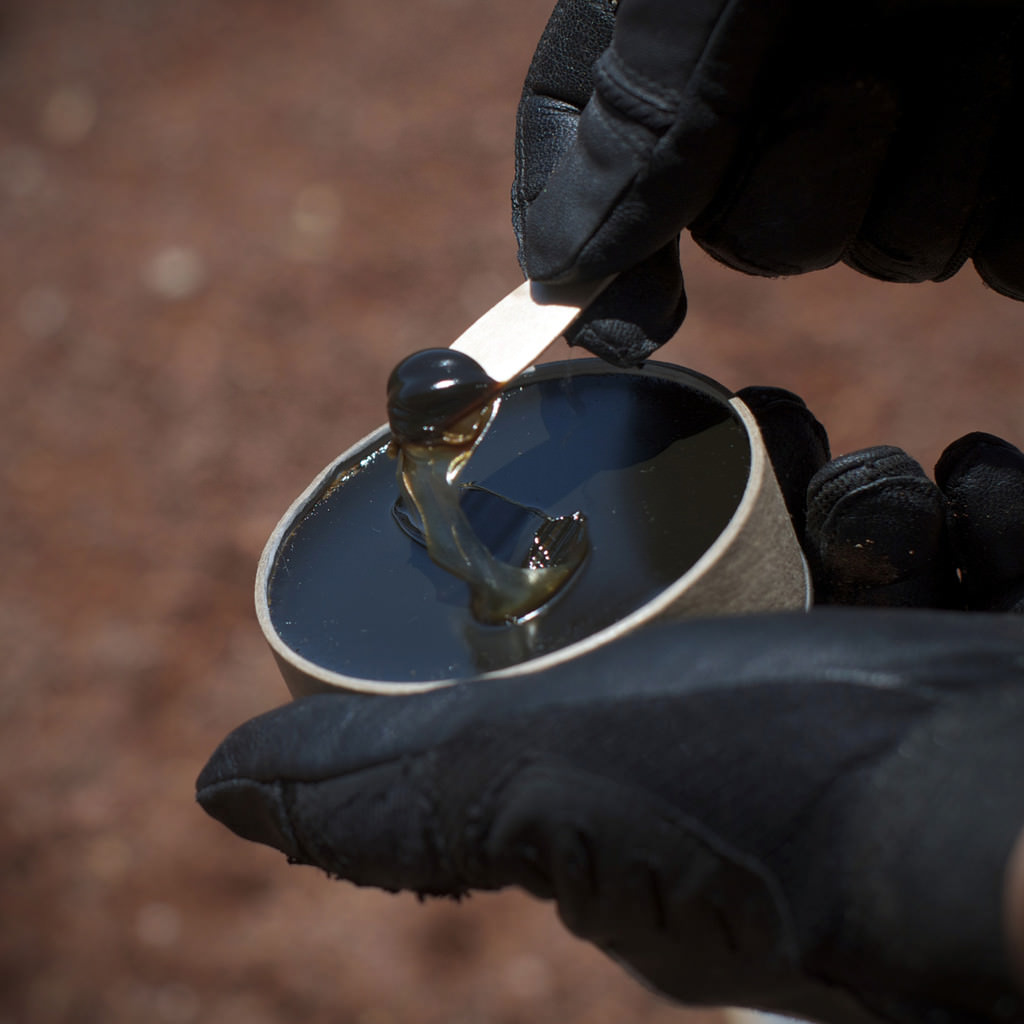
So when weeks and months pass — actually, years — before the sport's foggy leadership acknowledges that pitchers have emasculated batters by blatantly lathering balls with foreign substances, any fan still awake just shrugs and murmurs, "Buy me some peanuts and Pelican Grip."
Courtesy: WhatProsWear
Faced with a labor impasse that could lead to a crippling work stoppage, Major League Baseball has responded with a season so lifeless and soporific that we're almost begging for the games to fade away. Thanks largely to the illegal sticky goo, which allows pitchers to increase spin rates and reduce a hitter's chances of making even scant contact, an already sluggish sport has devolved into a hit-challenged, action-less slog. So-called commissioner Rob Manfred has known about these crimes, just as he knew about sign-stealing and just as predecessor Bud Selig knew about performance-enhancing drugs. Yet Manfred moved at a typically plodding pace, chatting privately with the Players Association while strikeout rates soared to an all-time high, batting averages plummeted to record lows and an unfathomable six no-hitters were pitched in a six-week period.
This unwatchable trudge couldn't have come at a worse time. With MLB ever-desperate to woo young people and retain future attention spans in a post-pandemic world, the industry never has been less relevant in America's sporting calendar. The NBA adjusted its season so the Finals end in mid-to-late July, as the almighty NFL and its predominant storylines heat up and the Tokyo Olympics begin, however perilously. Which means baseball, for the first time, won't have a single month in 2021 when it is front and center in our sights. Will anybody even notice when the collective bargaining agreement expires?
If nothing else, athletic competition must be governed by integrity. Why would a consumer, with so many entertainment choices, waste time, money and energy on a sport so relentlessly dishonest? It's mind-boggling that it took an unlikely character — the oft-mocked country singer, Joe West — to shine light on the epidemic of glue, pine tar and dipping. Enforcing rule 6.02c, the veteran umpire exerted his power on May 26 and confiscated the sunscreen-and-rosin-rubbed cap of Cardinals pitcher Giovanny Gallegos.
It led Cardinals manager Mike Shildt to throw the tantrum that finally prompted deep discussion and change. "This is baseball's dirty little secret," said Shildt, protecting his pitcher. "Let's go check the guys that are sitting there going into their glove every day with filthy stuff coming out, not some guy before he even steps on the mound with a spot on his hat." Naturally, the commish wasn't happy that a mere ump had stepped in and taken initiative, but if not for West, there wouldn't have been a reckoning the last two weeks that led to a long-overdue response: With the aid of the same video technology that sabotaged baseball — how's it going, Astros? — umpires will be required to inspect all pitchers for substances throughout games.
There could be as many as 10 random checks a game, reports ESPN, and starting pitchers will be checked at least two times per start. And while the Players Association will pounce with grievances, MLB is prepared to hammer cheating hurlers with 10-day suspensions without pay. Yes, the average length of games — which only has crawled the wrong way under Manfred — will be a bigger problem. And I'd feel better if suspensions were for 21 days and not 10 days, which makes it a one-start punishment for a starter. But beginning next week, at long last, Manfred is ready to take action and try to solve the latest disgrace on his watch.
What took him so long? Is he so intimidated by the union, not wanting to sever whatever CBA-negotiating thread remains, that he allowed a season to be swallowed by substance-induced spin rates? Was he not listening to the complaints, which started as whispers and mushroomed into open protests, from clubhouses? Did he not read the recent Sports Illustrated expose? Just what does Manfred do every day, exactly, in his Park Avenue office?
"I think the substance issue is real," Phillies catcher J.T. Realmuto said last month. "I think pitchers are using a lot more substances now than they have in the past. Not just a lot more, but it's been more effective than it has been. Guys are increasing their spin rate. That's why there's so many walks and strikeouts every game because guys are just letting it rip with all the spin. It's harder to control, but also harder to hit. I think if they cracked down on that, that would honestly help the offense a lot, get the ball in play more often, and less swing and miss."
This time, Manfred can't make the same short-sighted mistake and think players and managers eventually will police each other. They won't. There always has been a little boys' code, through the steroids and sign-stealing debacles, that says a team won't snitch on another in fear of being snitched on in reprisal. The same wink-wink nonsense has existed in the Pelican Grip Era, and just because some pitchers are suspended — trust me, they won't be the big names — doesn't mean balls won't be doctored.
The team to watch is in Los Angeles — and the pitcher to watch is the smart-ass in residency, Trevor Bauer. For all their resources as baseball's leading bluebloods, the Dodgers have too much talent to cheat, one would think. Yet their staff spin rate in 2021 reflects the highest one-year increase in the majors, SI reports. And you'd be an idiot not to suspect Bauer as the Spin King of Spin City, knowing he has accused others of cheating while acknowledging spin rates as his own secret sauce. His spin numbers are up dramatically the past two seasons, which inspired the Dodgers to follow their first World Series title in 32 years by giving Bauer a $102 million deal for three seasons. Their top four starters — Bauer, Walker Buehler, Clayton Kershaw, Julio Urias — rank in the top nine of four-seam fastball spin rates.
What's happening in your house there, Dave Roberts? Asked last week if his pitchers are using substances, the Dodgers manager said, "I don't know. I don't have those conversations. I really don't know."
Now that MLB is cracking down, Roberts is more interested in elaborating. "Once things are implemented, then we'll adhere to the rules," he said over the weekend. "That's the way we all should look at it."
All of which confirmed the credo of clubhouses since the mid-1990s: We'll cheat until they catch us … and then, if we want, we'll continue to cheat!
Of course, by the time Manfred tries to execute another clumsy plan, the sports world will be immersed in how the Brooklyn Nets are faring if James Harden has a bad hamstring. And whether Aaron Rodgers will report to the Packers or resume his hissy fit as another get-me-out-of-here control freak. And whether Jon Rahm — shame on the sports world for thinking COVID-19 is an afterthought — can recover from his positive test in time for the U.S. Open at Torrey Pines, where Phil Mickelson awaits at his boyhood course. And whether Japan will be ravaged by the coronavirus when it still is recovering from a tsunami, earthquake and nuclear disaster.
Baseball should be petrified about mass apathy. In what should be viewed as another putrid scandal, on full media blast, it's a faint blip in a niche sport. At least the game was interesting when we were enraged by steroids.
Courtesy: Orange County Register
Now it's only a sad, lonely country song, with Joe West on vocals.







No comments:
Post a Comment